
Your Bank Account vs. The LPG Scam: 5 Surprising Ways Fraudsters Are Exploiting Supply Fears
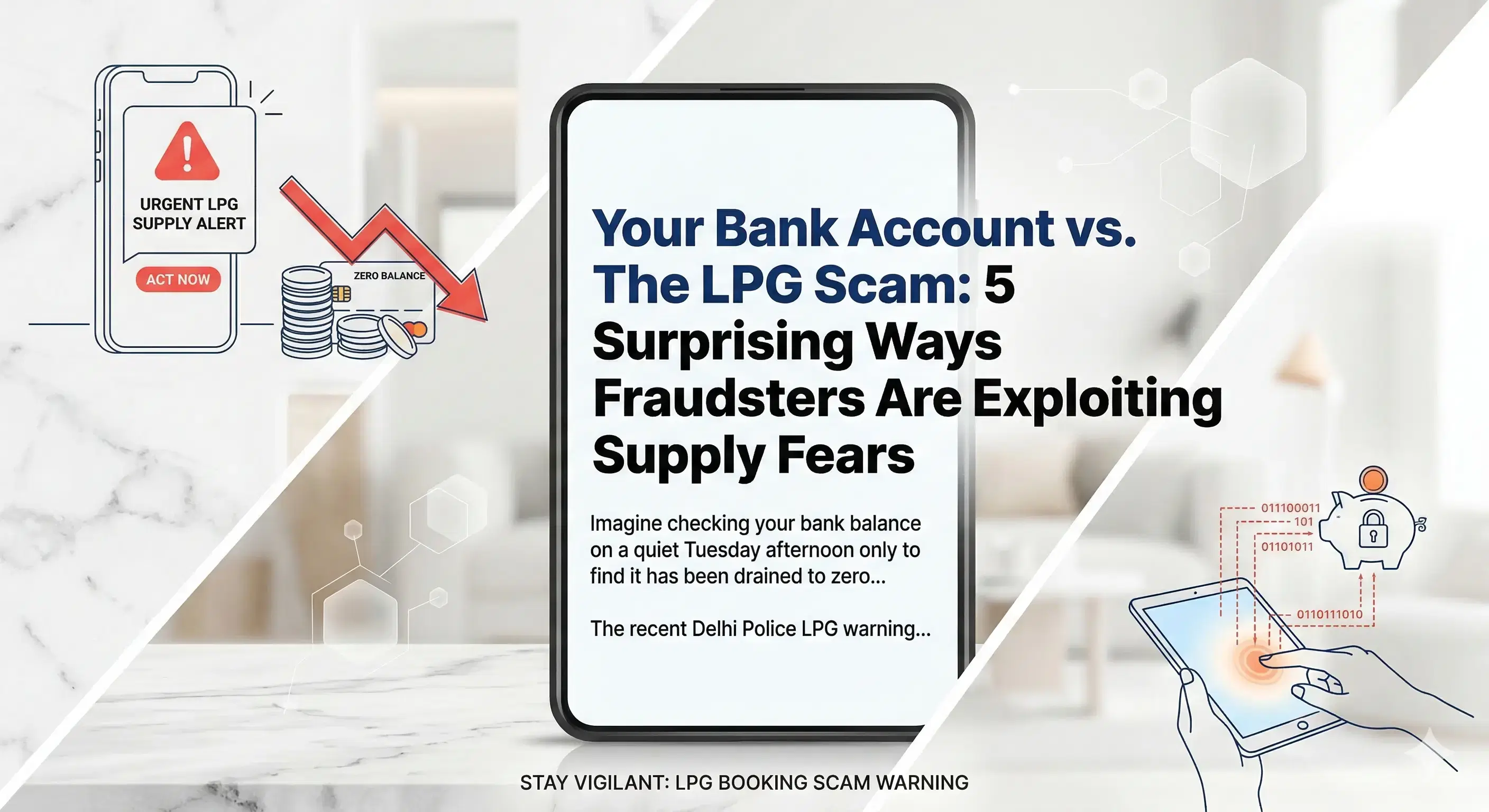
Your Bank Account vs. The LPG Scam: 5 Surprising Ways Fraudsters Are Exploiting Supply Fears
Imagine checking your bank balance on a quiet Tuesday afternoon only to find it has been drained to zero. There was no physical theft, no lost wallet—just a single, urgent text message about your kitchen's gas supply that you thought was legitimate. This nightmare is becoming a reality for thousands as cybercriminals weaponize global instability to hit consumers where it hurts most.
The recent Delhi Police LPG warning has shed light on a sophisticated LPG booking scam currently sweeping the country. By exploiting artificial urgency surrounding fuel supplies, fraudsters are successfully "hacking" human psychology to bypass traditional security instincts.
Definition: LPG Phishing & APK Fraud
Phishing involves scammers sending fraudulent communications—typically via SMS or social media—designed to trick you into revealing banking credentials or personal data. They often spoof the identities of trusted brands like Indane or HP.
Fraudulent APK Files are malicious Android application packages sent through text messages. Once installed, these files can grant hackers total control over your device, allowing them to mirror your screen and intercept OTPs.
Note for iOS Users: While APKs are Android-specific, iPhone users remain highly vulnerable to the phishing links that harvest login and credit card data.
1. Geopolitical Weaponization: How Scammers Turn Global Conflict into Local Theft
Scammers are masters of timing. They are currently leveraging news of international instability and conflict in West Asia to trigger a "fight or flight" response in households. This strategy is backed by a grim reality: official data shows that LPG consumption slumped by 17% in March due to war-related shortages and supply chain disruptions.
Fraudsters use these real-world headlines to make their "limited stock" threats feel authentic. When consumers fear a basic necessity like cooking gas will disappear, their critical thinking takes a backseat to survival instincts.
"Amid the ongoing conflict in West Asia and the resulting concerns over LPG supply, scammers have started targeting residents... with phishing messages and fraudulent APK files." — Advisory from Senior Police Officials.
2. The "KYC Pending" Illusion: Why You Can't Trust Your Inbox
The primary hook in this cylinder booking fraud is the "KYC Update" demand. Scammers use "Sender ID Spoofing" to make their messages appear in the same thread as your legitimate utility alerts. Even if the sender name appears as "Indane," "HP-Gas," or "LPG-FAST," the content is a trap.
Typical fraudulent messages include:
- "Your LPG KYC is pending. Limited stock. Click here to update and order."
- "Aadhaar link pending for your LPG. Verify now to avoid disconnection!"
- "Immediate payment required to continue connection. Click the link to pay now."
The Advocate's Insight: Legitimate utility providers will never demand an immediate digital KYC update via an unsolicited SMS link. The presence of a link is the red flag; the sender's name is merely a mask.
3. The Digital Mirror: How Fake Domains Siphon Your Savings
To the untrained eye, the websites used by scammers are indistinguishable from official portals. These "mirror sites" use the exact logos, color schemes, and layouts of major providers to harvest your banking credentials.
Authorities have identified several fraudulent domains, including:
- bookLPGfast.com
- lpg-booking.com
Pro-Tip: Always look at the address bar. If the URL does not begin with "https://" (the 's' stands for secure) or if it contains extra words like "fast," "now," or "deal," it is a phishing attempt. Furthermore, be wary of "service agents" who may follow the lead of real-world police awareness campaigns. While authorities are currently visiting residential areas to warn citizens, scammers may pose as these very officials to "verify" your details in person. Always ask for official identification.
Step-by-Step: How to Verify and Book Safely
- Verify the Sender, Ignore the Name: Do not trust bulk SMS messages based on the sender ID. Treat every link in a text message as suspicious.
- Delete APK Links Immediately: Never download a file ending in ".apk" sent via SMS. Official apps are only distributed through the Google Play Store or Apple App Store.
- Use Official Channels Only: Only book cylinders through the official websites of your provider or verified apps like BHIM, Umang, or your bank's official portal.
- The "HTTPS" Rule: Before entering any payment info, ensure the site is secure. Check for the padlock icon and ensure the domain name is spelled correctly (e.g., mahanagargas.com vs mahanagar-gas-booking.com).
People Also Ask (FAQ)
How do I know if an LPG booking link is fake?
A link is a fraud if it arrives via an unsolicited SMS, uses high-pressure language (e.g., "Account blocked in 2 hours"), or uses a domain that isn't the provider's primary website. Official companies will never ask for your full transaction PIN or Aadhaar OTP via a third-party link.
What should I do if I clicked on a suspicious LPG KYC link?
If you entered financial details, contact your bank immediately to freeze your accounts and cards. If you downloaded an APK, back up your photos and contacts, then perform a full factory reset of your phone. This is the only way to ensure malicious "spyware" is completely removed from the device.
Where can I report LPG cylinder booking fraud in India?
Report all suspicious activity to the National Cybercrime Helpline by dialing 1930. You should also file a formal complaint at the official government portal: cybercrime.gov.in.
Reporting Cyber Fraud: Essential Resources
| Resource Type | Contact / Link | Purpose |
|---|---|---|
| National Helpline | Dial 1930 | Immediate reporting to freeze fraudulent transactions. |
| Official Portal | cybercrime.gov.in | Filing formal complaints and tracking investigations. |
| Local Alerts | Official Police Social Media | Real-time updates on new fraudulent URLs and tactics. |
Conclusion
Digital vigilance is no longer optional; it is a necessity for financial survival. As scammers become more adept at social engineering—using global shortages and 17% consumption slumps to manufacture panic—our defence must be rooted in a "verify-first" mentality.
Scammers aren't just hacking apps; they are hacking your sense of urgency. As these tactics become more sophisticated, you must ask yourself: Is your first instinct to click, or to verify?