
How Online Fraudsters Use Fake Apps to Siphon Bank Accounts: A Cybersecurity Deep Dive
How Online Fraudsters Use Fake Apps to Siphon Bank Accounts: A Cybersecurity Deep Dive
Executive Summary
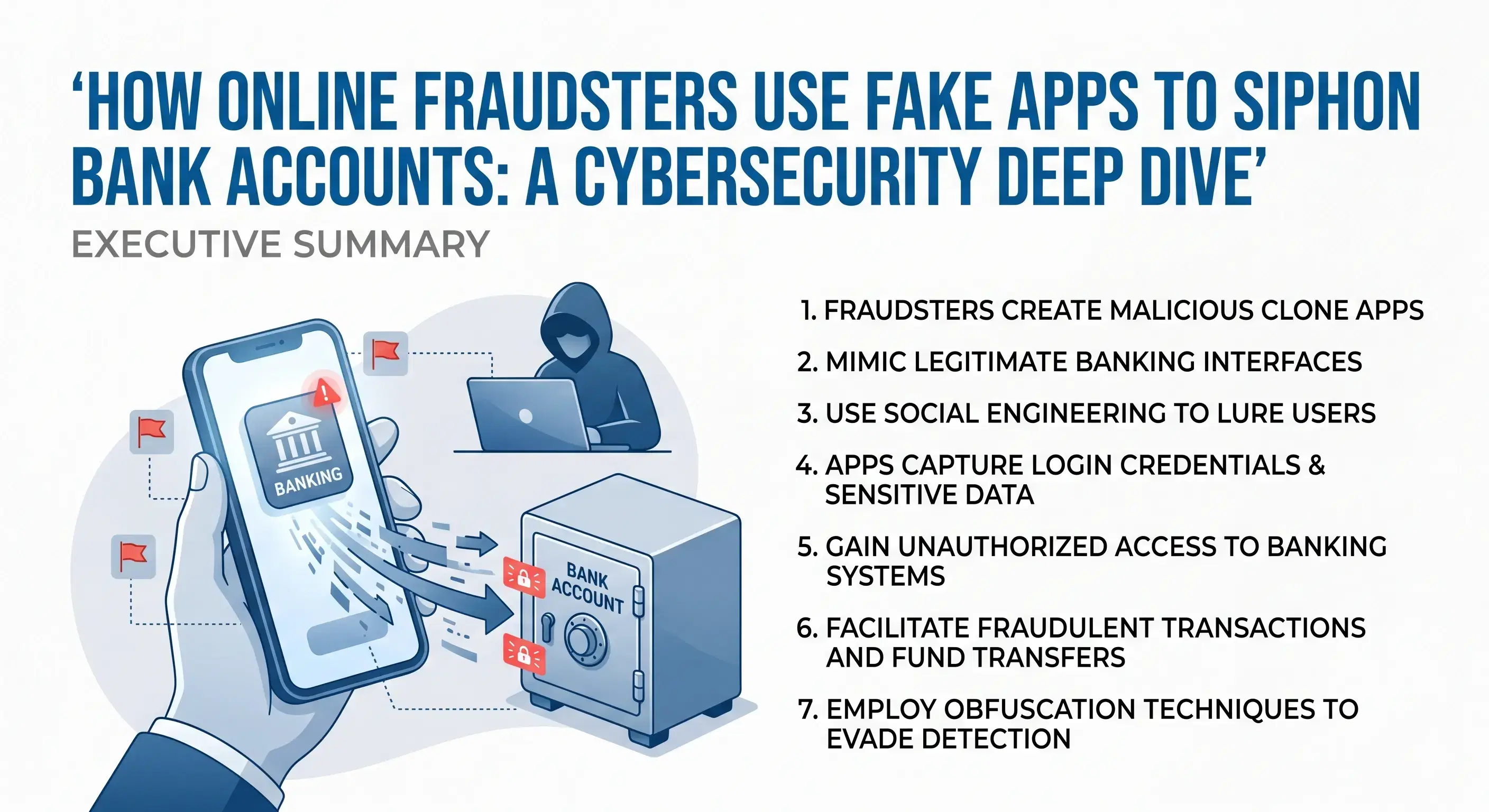
In the current threat landscape, remote access cybercrime is evolving through highly targeted social engineering. This report examines how fake app scams leverage malicious APK files and sophisticated phishing link security bypasses to compromise mobile devices. By understanding these vectors, users can better implement online fraud prevention strategies to protect their financial assets.
What is a Malicious APK?
A malicious APK is a fraudulent Android installation file distributed outside official app stores, such as the Google Play Store. These files are designed to install malware that grants attackers unauthorized remote control over a mobile device, allowing them to intercept data and perform financial transactions without the user's consent.
Introduction: High-Tech Hunters in the Deep Woods
Deep within a remote, forested region, a sophisticated digital syndicate was recently dismantled, proving that physical isolation is no barrier to modern financial theft. The regional police successfully apprehended six suspects who had transformed a primitive hideout into a high-tech command center for siphoning bank accounts.
By operating from secluded areas, these criminals attempted to evade traditional detection, utilizing deceptive mobile applications to strike at victims across the country. This operation highlights the increasing desperation and technical reach of fraud syndicates that weaponize daily utility tasks into digital traps.
The Anatomy of the Scam: Side-Loading and Remote Access
The methodology employed by these suspects relies on a combination of psychological manipulation and the exploitation of mobile operating system vulnerabilities. This process, often referred to as a side-loading attack, follows a precise progression:
- Circulation of Phishing Links: Suspects distribute fraudulent links via SMS or messaging platforms, often using urgent messaging regarding unpaid fines or utility service interruptions.
- Deceptive APK Installation: Victims are coerced into downloading malicious APK files from these links rather than official stores. In the latest crackdown, the primary files identified were
RTO e-Challan Check.apkandMGL Gas.apk. - Abuse of Accessibility Services: Once installed, the apps request permission to use Accessibility Services. This is a critical technical vulnerability; by granting this permission, the user allows the app to "read" the screen, capture keystrokes, and even perform automated gestures.
- Automated Financial Theft: With the ability to see the screen and control the device remotely, the fraudsters navigate to banking applications, read One-Time Passwords (OTPs) in real-time, and siphon funds directly from the victim's accounts.
Case Study: The Law Enforcement Operation
The dismantling of this group was made possible by the Pratibimb portal, a cutting-edge intelligence platform that provides real-time geographic data on active fraud signals. By mapping where these illicit signals were originating, the specialized cyber unit was able to pinpoint the suspects' location despite their attempts to hide in a dense forest.
Acting on these specific intelligence inputs, the specialized team conducted a coordinated raid on the hideout. The operation resulted in the arrest of all six suspects and the recovery of a significant inventory of hardware used to facilitate their crimes.
Evidence Seized During Operation
| Item | Quantity |
|---|---|
| Mobile Phones | 11 units |
| SIM Cards | 13 units |
| Motorcycles | 5 units |
Identifying Common Red Flags of Fake Utility Apps
Fraudsters often spoof services that require frequent user interaction, such as traffic fines and monthly utilities. Two primary themes are currently being exploited:
- Traffic/RTO Services: Apps disguised as "e-challan" checkers that claim to simplify the payment of traffic penalties.
- Gas Utilities: Fraudulent portals claiming to be official "MGL" or local gas provider applications for bill payments.
Expert Advice for Prevention
- Prohibit Side-Loading: Never download software from a link. If an app is not on the official Google Play Store, it is a high-risk file.
- Protect Your OTPs: Be aware that remote access malware allows criminals to see your SMS messages. Never assume an OTP is safe if your phone is behaving erratically or if you have recently installed a third-party app.
- Audit Permissions: Regularly check which apps have "Accessibility" or "Device Administrator" permissions. No utility app should require the ability to control your entire interface.
FAQ: People Also Ask
How do fraudsters use APK files to steal money?
Fraudsters package malicious code inside an APK file that creates a "remote access bridge." Once the victim enables specific permissions—most notably Accessibility Services—the criminal can see the screen in real-time, automate banking transactions, and intercept security codes without the victim's knowledge.
What is the Pratibimb portal?
The Pratibimb portal is a specialized intelligence tool utilized by the regional police to map and track active fraud signals. It provides law enforcement with actionable, real-time geographic data, allowing them to locate and dismantle cybercrime syndicates even when they operate from remote or hidden locations.
Can a fake RTO app access my bank account?
Yes. If a fake RTO app (like an e-challan checker) is installed via a phishing link and granted administrative permissions, it acts as a remote control for the attacker. The criminal can then open your banking apps, view your balance, and transfer funds as if they were the primary user.
Conclusion: Protecting Your Digital Assets
The successful operation by the regional police underscores the vital role of intelligence portals in modern law enforcement. However, as criminals continue to refine their fake app scams, the responsibility for online fraud prevention also rests with the user.
Maintaining rigorous digital hygiene—specifically by avoiding malicious APK files and treating unsolicited links with extreme skepticism—is the most effective defense against remote access cybercrime. Always report suspicious digital activity to the authorities immediately to assist in the ongoing effort to map and neutralize these predatory networks.