
The Hidden Danger of Unofficial Customer Care: How a Quick Search Can Cost You Thousands
The Hidden Danger of Unofficial Customer Care: How a Quick Search Can Cost You Thousands
Introduction: The High Cost of a Simple Phone Call
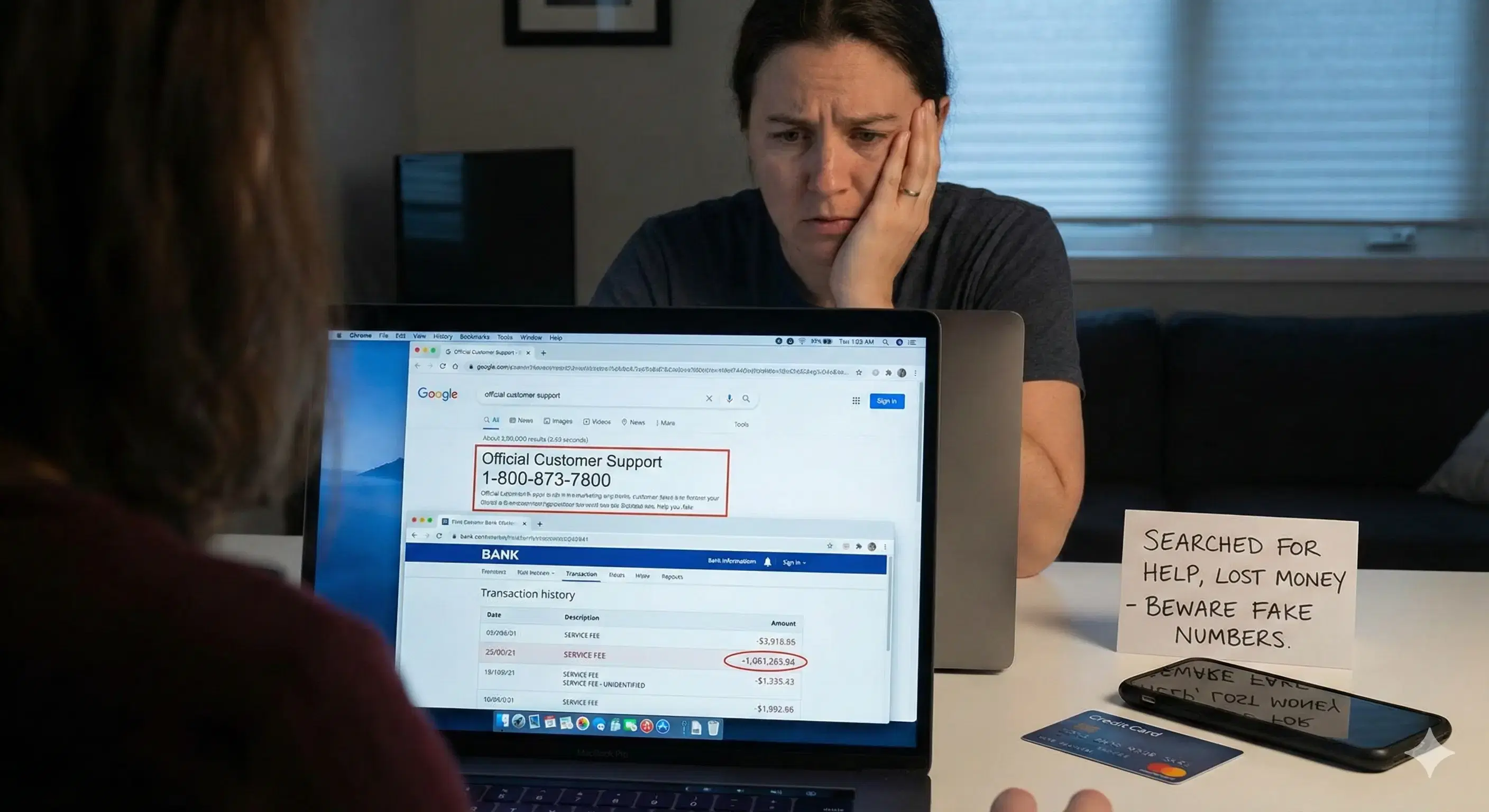
A simple online search for a customer care number can expose you to significant financial risk. Lurking among legitimate search results are fraudulent phone numbers planted by cybercriminals, designed to trick you into revealing sensitive information. This is a classic form of social engineering, where scammers spoof legitimate businesses to prey on individuals seeking help. This tactic, known as an "unofficial customer care scam," can lead to devastating monetary loss. As a cautionary tale, the case of Ashok Kumar, who lost nearly Rs 86,000 after calling a fake helpline, highlights just how dangerous a single unverified phone call can be when dealing with unofficial customer care.
1. A Real-Life Nightmare: The Rs 85,999 Fake Helpline Scam
The following incident illustrates how quickly a minor issue can escalate into a major financial crisis when a threat actor successfully exploits a moment of vulnerability.
1.1. The Lure: A Small Discrepancy Sparks Concern
Ashok Kumar, a 37-year-old from Karakala, noticed small, recurring debits of Rs 74 and Rs 80 from his two bank accounts each month. Wanting to resolve the issue, he decided to contact his bank's customer service department.
1.2. The Deceptive Search: Dialing a Scammer's Number
Mr. Kumar used an online search—the primary attack vector in this scam—to find his bank's customer care number. He found a number, which turned out to be fake, and dialed it. The person who answered the call asked him to share his PhonePay number to proceed with a "fix."
1.3. The Financial Aftermath: Money Vanishes in Seconds
Immediately after sharing his details, Mr. Kumar discovered that Rs 49,999 and Rs 36,000 were deducted from his two accounts, respectively. The total loss amounted to Rs 85,999. The scammer likely used his PhonePay number to send a "collect" or "request money" prompt, which Mr. Kumar may have been tricked into approving, believing he was authorizing a refund or a verification step. A formal police complaint was registered at the Karkala police station under sections 66(C) and 66(D) of the Information Technology Act and Section 318(4) of the BNS.
2. It's Not an Isolated Incident: The Rise of Online Transaction Fraud
While Ashok Kumar's loss began with a phone call, it's crucial to recognize that this is part of a wider landscape of online financial fraud where criminals exploit various digital vulnerabilities. A separate case in Udupi demonstrates how significant losses can occur even without direct interaction with a scammer.
On January 12, a woman from Udupi discovered that Rs 1,59,519.03 had been illegally transferred from her savings account when she visited her bank to invest in a fixed deposit. The investigation revealed that the fraudulent online transactions had occurred between January 8 and January 10 without her knowledge. Based on her complaint, a case was registered under Section 318(4) of the BNS and Section 66(D) of the IT Act.
3. How to Protect Yourself from Customer Care Scams
Adhering to strict security protocols is the most effective defense against these social engineering attacks. Follow these essential security best practices to ensure you are contacting a legitimate representative.
- Always Use Official Sources: Find customer care and helpline numbers exclusively on a company's official website, its official mobile application, or printed on the back of your physical bank cards, account statements, and other official correspondence.
- Be Wary of Search Engine Results: The top result in an online search is not guaranteed to be the official one. Scammers can promote fake websites and listings to appear at the top of search pages.
- Never Share Sensitive Information: A legitimate customer service agent will never ask you to provide payment app details (like a PhonePay number), passwords, PINs, or full card numbers over the phone to resolve a problem. Treat any such request as an immediate red flag. Legitimate institutions already have your account details and use secure, multi-factor authentication methods for verification; they will never rely on you reading sensitive data over a call.
4. What to Do If You Suspect You've Been Scammed
If you believe you have fallen victim to a scam, taking immediate action is critical to mitigating the damage.
- Contact Your Bank Immediately: Report the fraudulent activity to your financial institution without delay. This allows them to take necessary actions, such as blocking your accounts or cards, to prevent any further unauthorized transactions.
- File an Official Complaint: Register a formal complaint with the police, as the victims in the provided examples did. A police report is a crucial step for investigation and potential recovery of funds.
5. Frequently Asked Questions (FAQ) about Customer Care Scams
5.1. How do these customer care scams typically start?
They often begin when a person searches online for a customer care number and inadvertently dials a fake number that scammers have published in search results.
5.2. What kind of information do scammers ask for?
Based on documented cases, scammers may ask for details related to your payment applications, such as your PhonePay number, to initiate fraudulent transactions.
5.3. What are the consequences of calling an unofficial customer care number?
The consequences can be severe financial loss. Victims have reported losing substantial amounts of money, including losses of Rs 85,999 and over Rs 1.6 lakh, through unauthorized online transactions initiated by scammers.
Conclusion: Stay Vigilant, Stay Safe
The convenience of an online search comes with hidden dangers. The primary threat highlighted by these cases is the risk of contacting fraudulent helplines that are weaponized for social engineering attacks. Always take the extra moment to verify contact information through official channels before making a call. Treating contact information verification as a non-negotiable security step is fundamental to protecting your assets in the digital age.