Warning: This LinkedIn Job Scam Looks So Real, It Fooled a Career Coach
Warning: This LinkedIn Job Scam Looks So Real, It Fooled a Career Coach
1.0 Introduction: The High-Stakes World of Online Job Hunting
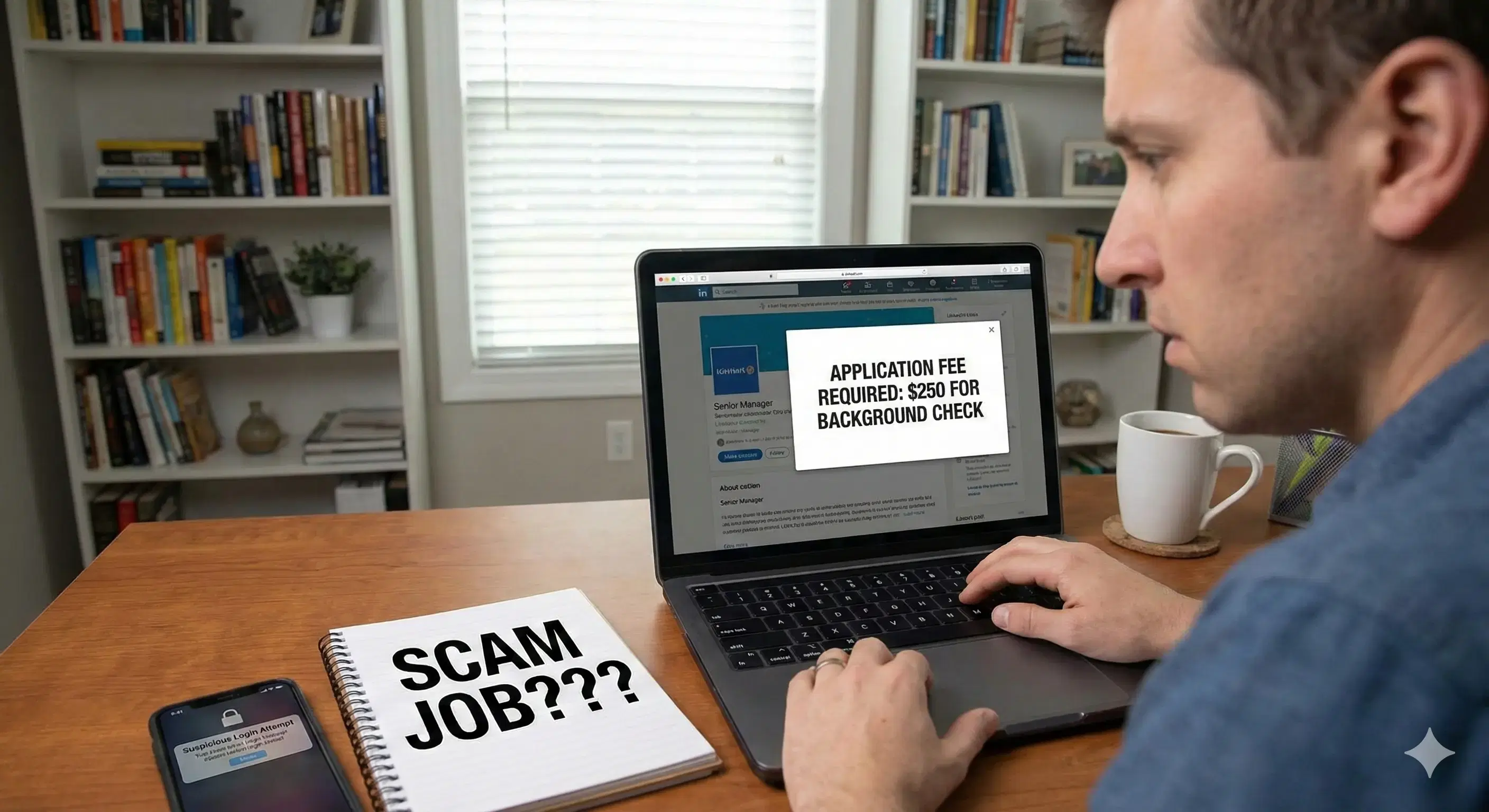
Navigating today's competitive job market is challenging enough without having to worry about fraud. As hiring moves increasingly online, however, sophisticated scams are becoming harder to spot, preying on the hopes of eager applicants. In a viral Instagram reel, job hunt coach Vini shared her own recent brush with one of these schemes. After hours of preparation for what she thought was a legitimate role, she found herself on the receiving end of a "frustrating and exhausting" scam. She's sharing her story to protect other students and professionals who are navigating a tough job market and are increasingly being targeted. This article breaks down the subtle red flags she discovered, providing a practical guide to help you stay safe in your job search.
2.0 Takeaway 1: The Scam's Greatest Weapon is Legitimacy
The most dangerous aspect of this new wave of scams is how professional they appear. The process Vini went through initially seemed completely legitimate, making it difficult to detect any deception. She first applied for a role on LinkedIn that looked credible and professional. Soon after, she received a formal email response scheduling an interview and was provided with what appeared to be a genuine interview link. Believing the opportunity was real, she spent hours preparing for the conversation. This professional veneer is what makes the scam so effective; it bypasses initial suspicion by mirroring every step of a real recruitment process, costing applicants precious time and emotional energy.
3.0 Takeaway 2: Your Device Can Be Your First Line of Defense
The first major clue that something was wrong was a technical one. The interview link sent to Vini was device-specific: it worked on Android and Windows devices but consistently failed to open on her iPhone and Mac. While one might assume this is due to superior security on Apple products, a more likely explanation is that the scam's exploit was specifically designed for the Windows OS. This device-restricted behavior is a critical technical red flag. A legitimate company will use accessible, cross-platform technology to ensure all candidates can connect, regardless of their operating system.
4.0 Takeaway 3: Real Recruiters Don't Ask You to Disable Your Security
The most blatant and alarming red flag came when the interview link prompted Vini to turn off her VPN. This request is a massive warning sign that should never be ignored. Legitimate companies and recruiters will never ask a candidate to compromise their digital security or disable protective software to attend an interview. This step is designed to make your system vulnerable to malware or data theft. For Vini, this was the moment the scam became undeniable.
"That's when it hit me — I had been scammed."
5.0 Takeaway 4: Always Verify the Source
The final confirmation of the scam came from a classic security check: examining the sender's email address. A closer look revealed a suspicious domain that did not match the official company. This underscores the importance of a multi-step verification process. Vini specifically urges job seekers to cross-check recruiter profiles on LinkedIn to ensure they are real employees of the company.
Other job seekers have shared similar stories where proactive verification saved them. One user's mother called a company directly to reschedule a supposed interview, only to be told that no one by the recruiter's name worked there and the company wasn't hiring. Another applicant, suspicious of a job posting on Indeed, found the company's official email on their website, contacted them, and confirmed they had never posted the role. Taking the extra step to contact a company through its official channels is the ultimate verification tool.
6.0 Conclusion: Trust Your Gut and Stay Vigilant
In an era where job hunting is a primarily digital activity, awareness and vigilance are your strongest defenses against fraud. As Vini's experience shows, scammers are creating increasingly elaborate schemes that look real at every step. Pay attention to the technical details, question any unusual requests, and always verify information independently. Most importantly, trust your instincts. If something feels off, it probably is—and you are exactly the kind of "desperate" and hopeful professional these scammers are hoping to exploit.
What's one extra step you'll take to verify your next online job opportunity?
7.0 Frequently Asked Questions (FAQ)
What are the main red flags of a LinkedIn job scam?
Based on this incident, the main red flags to watch for are:
- Interview links that are device-restricted (e.g., only work on Windows/Android).
- Requests to turn off your security settings, such as a VPN.
- Suspicious sender email domains that do not match the company's official website.
Will a legitimate recruiter ask you to turn off your VPN?
No. A genuine recruiter or company will never ask a candidate to disable security settings like a VPN to participate in an interview. Such a request is a major indicator of a scam.
What is the best way to verify a job opportunity is real?
The best way to verify an opportunity is through a multi-step process. First, contact the company directly using contact information found on their official website, not from the email or job posting you received. As essential secondary checks, Vini advises job seekers to always verify the company's official website and cross-check recruiter profiles on LinkedIn to ensure they are legitimate employees of the company they claim to represent.