
Income Tax Refund Scam: How to Spot Fake Messages & Stay Safe
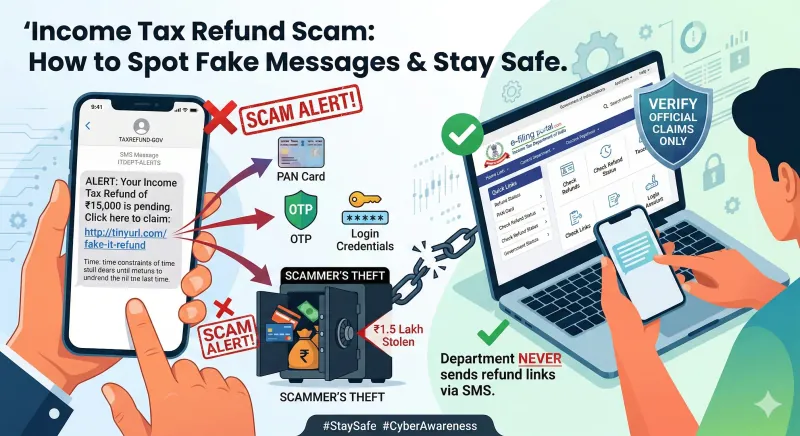
The Income Tax Department has issued an urgent warning after a taxpayer lost ₹1.5 lakh in an Income Tax Refund Scam. Cybercriminals are increasingly targeting taxpayers by sending fake refund notifications and phishing messages designed to steal sensitive information such as PAN details, login credentials, OTPs, and banking information. Understanding how these scams operate is essential for protecting your finances and personal data.
1. Introduction: The Rising Threat of Refund Fraud
Tax refund scams are becoming increasingly sophisticated, particularly during tax filing and refund seasons. Cybercriminals actively monitor social media platforms and identify taxpayers expressing concerns about delayed refunds. They then send highly targeted messages that appear to offer a solution to the delay. By impersonating official government communications, scammers exploit urgency and frustration to trick victims into revealing confidential information or granting access to their accounts.
2. How the Income Tax Refund Scam Works: A Step-by-Step Breakdown
The scam follows a carefully designed process that closely resembles legitimate government procedures, making it difficult for unsuspecting taxpayers to identify the fraud.
The Initial Contact: Victims receive an SMS claiming their income tax refund is pending, delayed, or requires verification.
The Hook: The message includes a link that appears official and encourages immediate action.
The Fake Portal: Clicking the link redirects the user to a fraudulent website designed to look like the official Income Tax portal.
Data Theft: The fake portal requests PAN details, login credentials, OTPs, and sometimes banking information.
The Result: Fraudsters use the stolen information to access accounts, intercept refunds, or withdraw money from linked bank accounts.
3. Psychological Triggers: Why Taxpayers Fall for Phishing
These scams rely heavily on social engineering techniques designed to provoke emotional reactions and bypass logical decision-making.
Fear-Based Language: Messages contain words such as "urgent," "action required," or "account suspension."
Final Reminder Tactics: Scammers create artificial urgency to discourage verification.
Threats of Refund Cancellation: Victims are told their refund will lapse if they do not act immediately.
Personalized Targeting: Fraudsters identify taxpayers discussing refund delays online and target them with customized messages.
4. Official Policy: What the Income Tax Department Never Does
Understanding how the Income Tax Department actually communicates can help you identify fraudulent messages immediately.
Never sends refund verification links through SMS or WhatsApp.
Never asks for OTPs to release or verify refunds.
Never requests passwords or login credentials through external links.
Never asks taxpayers to update banking information through SMS-based links.
All refund-related actions are handled through the secure e-filing portal.
5. The Truth About Refund Delays: Why Your Money is Actually Late
Legitimate refund delays are usually caused by internal verification procedures and not because any action is required through an SMS link. The Income Tax Department may take additional time to verify information, match records, or investigate discrepancies before releasing refunds.
Due Verification: Additional checks are performed on submitted returns.
Data Matching: Filed information is compared against TDS records and government databases.
Flagged Discrepancies: Returns with inconsistencies may be placed under additional scrutiny or verification.
6. Protective Measures: How to Secure Your Tax Account
The most effective defense against tax refund scams is a proactive security mindset. Following these practices can significantly reduce your risk of becoming a victim.
Manually Audit the URL: Access the portal by typing the official website address directly into your browser.
Ignore Urgent Requests: Treat any message pressuring immediate action with suspicion.
Protect Credentials: Never share OTPs, passwords, login IDs, or banking details with anyone.
Verify Refund Status Directly: Check refund information only through the official e-filing portal.
Report Fraud Attempts: Notify the relevant authorities about suspicious messages and phishing attempts.
7. Frequently Asked Questions (FAQ) About Tax Refund Scams
Q1: How do I check my real refund status safely?
Access the official Income Tax e-filing portal directly and review your refund status through the Refund/Reissue section of your account dashboard.
Q2: Does the Income Tax Department send links via SMS?
No. While SMS notifications may inform taxpayers about refund processing updates, the department does not send links asking users to claim, verify, or release refunds.
Q3: What should I do if I receive a message about a pending refund with a link?
Do not click the link. Take a screenshot if necessary for reporting purposes, delete the message, and verify your refund status through the official portal.
Q4: Who should I report phishing attempts to?
You should report suspicious messages to the Income Tax Department's official grievance channels and the appropriate cybercrime reporting authorities.
Q5: Can a refund lapse if I don't click an SMS link?
No. Legitimate refunds do not depend on clicking SMS links. Any required action will be communicated securely through the official e-filing portal.
8. Conclusion: Vigilance is Your Strongest Defense
Tax refund delays can be frustrating, but they should never be treated as emergencies requiring immediate action through unsolicited links. Scammers rely on urgency, fear, and confusion to trick taxpayers into surrendering sensitive information. By relying exclusively on the official Income Tax portal, verifying communications carefully, and treating all unexpected refund-related messages with suspicion, you can protect your finances and ensure your refund reaches the right place: your account.