
The Hidden Danger of Unofficial Customer Care: How a Quick Search Can Cost You Thousands
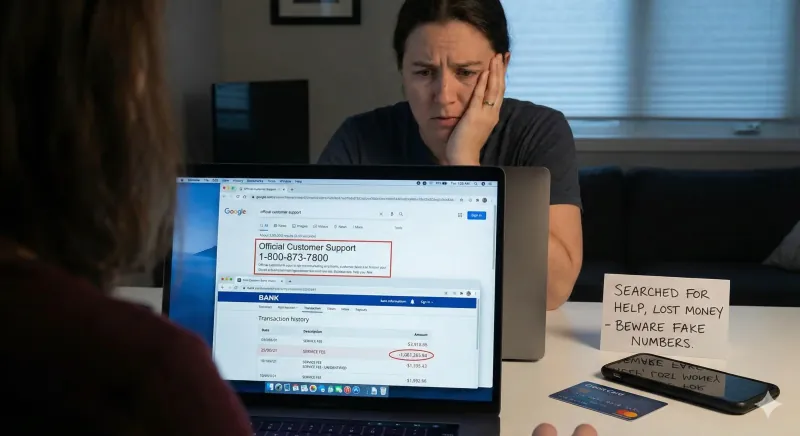
A simple online search for a customer care number can expose you to significant financial risk. Lurking among legitimate search results are fraudulent phone numbers planted by cybercriminals, designed to trick you into revealing sensitive information. This article explains how unofficial customer care scams work, highlights real-world cases, and provides practical steps to stay safe.
Introduction: The High Cost of a Simple Phone Call
A simple online search for a customer care number can expose you to significant financial risk. Lurking among legitimate search results are fraudulent phone numbers planted by cybercriminals, designed to trick you into revealing sensitive information. This is a classic form of social engineering where scammers impersonate legitimate businesses to exploit individuals seeking help. The case of Ashok Kumar, who lost nearly Rs 86,000 after calling a fake helpline, demonstrates how dangerous a single unverified phone call can be.
1. A Real-Life Nightmare: The Rs 85,999 Fake Helpline Scam
The following incident illustrates how quickly a minor issue can escalate into a major financial crisis when scammers exploit a moment of vulnerability.
1.1 The Lure: A Small Discrepancy Sparks Concern
Ashok Kumar, a 37-year-old from Karakala, noticed small recurring debits of Rs 74 and Rs 80 from his bank accounts each month. Wanting to resolve the issue, he decided to contact his bank's customer service department.
1.2. The Deceptive Search: Dialing a Scammer's Number
Mr. Kumar used an online search to find his bank's customer care number. Unfortunately, the number he found was fake. After calling it, the person on the other end asked him to share his PhonePe number to process a supposed fix.
1.3. The Financial Aftermath: Money Vanishes in Seconds
Immediately after sharing his details, Mr. Kumar discovered that Rs 49,999 and Rs 36,000 had been deducted from his accounts. The total loss amounted to Rs 85,999. A police complaint was subsequently registered under the relevant provisions of the Information Technology Act and BNS.
2. It's Not an Isolated Incident: The Rise of Online Transaction Fraud
Ashok Kumar's case is part of a broader trend of online financial fraud affecting consumers across the country. In another incident, a woman from Udupi discovered that Rs 1,59,519.03 had been illegally transferred from her savings account. The fraudulent transactions occurred without her knowledge over multiple days. A formal case was registered after the unauthorized transactions were discovered.
3. How to Protect Yourself from Customer Care Scams
Following strict security practices is the most effective defense against customer care scams.
Always Use Official Sources: Find customer care numbers only on official websites, official mobile applications, bank cards, account statements, or official correspondence.
Be Wary of Search Engine Results: The top result in a search engine is not always legitimate. Scammers can promote fake listings and websites.
Never Share Sensitive Information: Legitimate customer service representatives will never ask for passwords, PINs, OTPs, or complete card details over the phone. Any such request should be treated as an immediate red flag.
4. What to Do If You Suspect You've Been Scammed
If you believe you have become a victim of a scam, immediate action is critical.
Contact Your Bank Immediately: Report the fraudulent activity without delay. Request account or card blocking if necessary.
File an Official Complaint: Register a complaint with local law enforcement authorities. A police report is often required for investigation and potential recovery efforts.
5. Frequently Asked Questions (FAQ) About Customer Care Scams
5.1. How do these customer care scams typically start?
These scams often begin when a person searches online for a customer care number and unknowingly calls a fake number published by scammers.
5.2. What kind of information do scammers ask for?
Scammers may ask for payment app details, banking information, OTPs, passwords, or other sensitive information that can be used to facilitate fraud.
5.3. What are the consequences of calling an unofficial customer care number?
The consequences can include severe financial losses, unauthorized transactions, identity theft, and compromise of personal information. Victims have reported losses ranging from tens of thousands to several lakhs of rupees.
Conclusion: Stay Vigilant, Stay Safe
The convenience of an online search comes with hidden dangers. Fraudulent customer care numbers are increasingly being used as a tool for social engineering attacks and financial fraud. Always verify contact information through official channels before making a call. Treat contact verification as a mandatory security step to protect your finances and personal information in the digital age.