
The iPhone 18 Half-Price Trap: How a ₹1,000 Pre-Booking Turned Into a ₹6.33 Lakh Loss
Introduction: When Launch Hype Becomes a Weapon
Every September, Apple's new iPhone launch sets off a wave of excitement, and this year was no different. Pre-orders for the iPhone 18 Pro and iPhone 18 Pro Max opened in India on September 12, 2026, and sales began on September 18, with prices starting at ₹1,64,900 for the iPhone 18 Pro and ₹1,79,900 for the Pro Max.
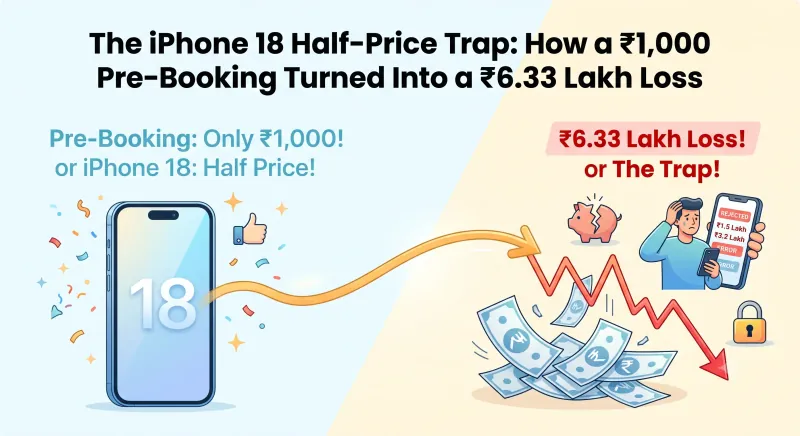
With a price tag like that, an offer to buy the new iPhone for half its price sounds like a dream. That is exactly what cybercriminals are counting on. Within days of the launch, a doctor from Saharanpur lost ₹6.33 lakh after paying a ₹1,000 "pre-booking" fee for a half-price iPhone 18 advertised on Telegram. At the same time, cybersecurity firm Kaspersky has flagged a wave of fake iPhone 18 shopping websites designed to steal money and personal data from buyers around the world.
This article breaks down how the iPhone 18 scam works, the warning signs to watch for, and what to do if you have already been targeted.
1. Case Study: The ₹1,000 Pre-Booking That Never Ended
The victim, Dr. Asma Ahmed, a doctor from the Janakpuri police station area of Saharanpur, Uttar Pradesh, came across a message on Telegram advertising the iPhone 18 at roughly half its market value.
1.1 The Hook: A Small, Believable Payment
On September 15, she paid a ₹1,000 pre-booking fee via UPI from her State Bank of India account. The amount was deliberately small. A low first payment feels low-risk and makes the whole deal look genuine, which is exactly why scammers start this way.
1.2 The Escalation: One Charge After Another
Once the first payment went through, the "seller" began inventing new charges for every stage of the supposed delivery:
September 15: ₹2,000 and ₹3,999 as "working charges"
September 17: ₹22,043 as "shipping charges"
September 18: Two separate payments of ₹44,086
September 19: ₹19,570 and further payments of ₹7,280, this time under the threat that her account would be "put on hold" if she did not pay
September 20–22: Additional instalment payments through SBI and YONO Cash
By the time she realised no phone was ever coming, the total loss had reached approximately ₹6.33 lakh. An FIR has been registered with the Cyber Crime Police, and investigators are examining the bank accounts and digital payment channels used to receive the money.
1.3 Why Victims Keep Paying
This is a classic advance-fee fraud combined with the sunk cost trap. After paying ₹1,000, then ₹5,000, then ₹25,000, victims feel that stopping means losing everything they have already paid. Scammers exploit this by always promising that the next payment is the last one. When that stops working, they switch to threats, such as a frozen account or a cancelled order, to create panic.
2. The Bigger Picture: A Global Wave of Fake iPhone 18 Stores
The Telegram scam is only one part of a much larger campaign. Kaspersky researchers have identified fraudulent websites in English, Arabic, Portuguese and other languages promoting non-existent iPhone 18 deals. According to reports, more than 200 iPhone-related domains were registered within 24 hours around the launch, compared with zero or one on a typical day.
2.1 How the Fake Websites Work
Realistic Design: The sites copy official Apple product images and specifications, and some use AI-generated content to look polished and trustworthy.
Too-Good-To-Be-True Discounts: One fake store offered the new iPhone at a 25% discount, something no authorised seller does at launch.
Fake Pre-Orders: Some sites took "pre-orders" for colours and storage options that Apple never announced.
Flexible Payment Promises: Victims are told they can "settle the remaining balance later" and will get a full refund if they cancel.
Crypto Payments: Several sites accept Bitcoin, which is almost impossible to trace or reverse.
2.2 Your Data Is the Real Prize
Before asking for payment, these fake stores collect your full name, phone number, email address, city and WhatsApp number, and then your bank card details. Even if you never complete a purchase, this data can be sold or used for follow-up phishing calls, identity theft and card fraud.
"We have seen scam offers emerge around high-profile device launches for years. Consumer excitement can give cybercriminals an additional advantage." — Olga Altukhova, Senior Web Content Analyst, Kaspersky
3. Red Flags: How to Spot an iPhone 18 Scam
Red FlagWhy It MattersiPhone 18 offered at 25–50% offBrand-new flagship phones are never sold at huge discounts at launchSold via Telegram, WhatsApp or Instagram DMsApple and authorised resellers do not sell through private chatsA small "pre-booking" or "token" feeThis is the classic opening move of an advance-fee scamNew charges keep appearing (shipping, working, customs, GST)A genuine seller quotes one final price upfrontThreats that your account or order will be "put on hold"Pressure and panic are used to stop you from thinking clearlyPayment only by UPI to personal accounts, bank transfer or cryptoThese methods offer little or no buyer protectionColours, models or storage options Apple never announcedFake sites often get product details wrongCountdown timers and "only 3 left" messagesArtificial urgency is designed to rush your decision
At the time of writing, Apple has only put the iPhone 18 Pro and iPhone 18 Pro Max on sale in India. Any seller offering other iPhone 18 models, or any model at a steep discount, should be treated as highly suspicious.
4. How to Buy Your New iPhone Safely
Buy Only From Official Channels: Use the Apple India Store (online or at Apple retail stores), Apple Authorised Resellers, or well-known e-commerce platforms selling directly.
Type the Website Address Yourself: Never click on links from ads, SMS, emails or chat messages. Manually type the official address into your browser.
Compare Prices and Dates With Apple's Official Information: If a price is far below Apple's listed price, it is a scam.
Never Pay a "Pre-Booking" Fee to an Individual: Do not send UPI payments to personal accounts for a product you have not received from a verified seller.
Use Payment Methods With Protection: Prefer credit cards or virtual cards, which offer better dispute options than UPI transfers, bank transfers or crypto.
Protect Your Personal Details: Do not share your WhatsApp number, card details or OTPs on unfamiliar websites.
Enable Multi-Factor Authentication: Turn on MFA for your banking, email and Apple ID accounts to limit damage if your details are leaked.
5. What to Do If You Have Been Scammed
Speed is critical. The sooner you act, the higher the chance of freezing the money before it moves through mule accounts.
Stop Paying Immediately: No matter what the scammer promises or threatens, do not send another rupee. There is no "final payment" that releases your phone.
Call the Cybercrime Helpline 1930: Report the fraud immediately so action can be taken to block the transactions.
File a Complaint Online: Register your complaint at https://www.cybercrime.gov.in with screenshots of chats, UPI transaction IDs and the scammer's account details.
Inform Your Bank: Call your bank to report the fraudulent transactions and block your card if you shared card details.
Change Your Passwords: If you entered login details or personal information on a suspicious website, change your passwords and watch your accounts for unusual activity.
6. Frequently Asked Questions (FAQ) About the iPhone 18 Scam
What is the iPhone 18 half-price scam?
It is an advance-fee fraud where scammers advertise the new iPhone 18 at around half its price, usually on Telegram or social media. They collect a small pre-booking fee and then keep demanding more money for "working charges," shipping and account unblocking until the victim stops paying. The phone is never delivered.
How much did the Saharanpur victim lose?
A doctor from Saharanpur lost approximately ₹6.33 lakh between September 15 and 22, 2026, after starting with a ₹1,000 pre-booking payment made through UPI.
How can I tell if an iPhone 18 website is fake?
Watch for large discounts, product colours or storage options that Apple has not announced, Bitcoin payment options, "pay the rest later" offers, and requests for your WhatsApp number or card details before checkout. When in doubt, type the official Apple website address yourself.
Are Telegram deals on new iPhones ever genuine?
A brand-new flagship iPhone offered at a dramatically reduced price on Telegram or any messaging platform should be treated as a scam, especially if the seller keeps adding new charges.
Can I get my money back?
Recovery is possible only if you act quickly. Call 1930 and file a complaint on https://www.cybercrime.gov.in as soon as you realise you have been cheated, so authorities can attempt to freeze the funds.
Conclusion: If It's Half the Price, It's Probably a Scam
The iPhone 18 launch shows how quickly cybercriminals turn excitement into opportunity. Whether it is a Telegram seller asking for a ₹1,000 token amount or a slick website offering a 25% discount, the playbook is the same: lure you in with a deal that feels too good to miss, then take your money and your data.
The festive shopping season will bring even more offers on smartphones and electronics. Before you pay, pause and ask: is this seller official, is this price realistic, and why are they asking for more money? If you encounter a suspicious offer, report it to the cybercrime helpline at 1930 without delay.