
The Parcel You Never Ordered: The Dangerous New Scam Hiding in Your Delivery Notifications
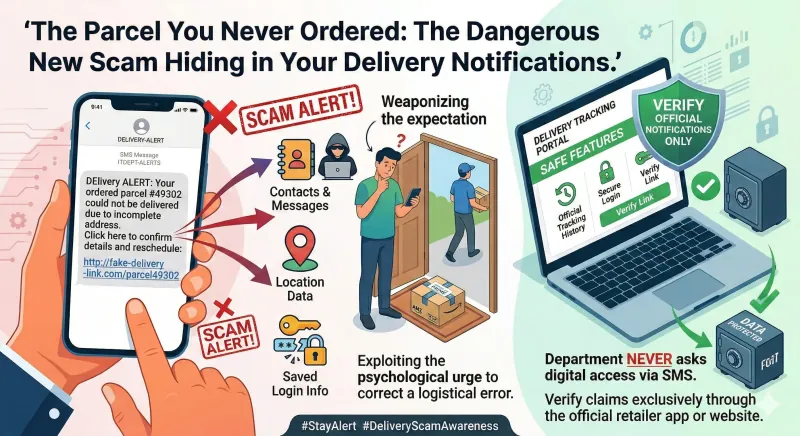
The convenience of modern deliveries has become a normal part of daily life. From groceries and household essentials to electronics and online purchases, receiving packages is now routine for many households. Unfortunately, cybercriminals are exploiting this familiarity through a dangerous scam that uses fake parcel deliveries, OTP requests, and social engineering tactics to gain access to victims' devices, bank accounts, and personal information.
The Counter-Intuitive 'Cancellation' Trap
This scam begins when a fraudster posing as a delivery agent contacts a victim and claims that a parcel has been mistakenly booked to their address. Since the victim knows they never placed the order, their natural reaction is to correct the mistake. The scammer then offers to cancel the delivery and asks the victim to share an OTP or click a link sent through SMS. In reality, the OTP is often being used to authorize a financial transaction, register a device, or gain access to an account. Instead of canceling a parcel, the victim unknowingly hands over control of sensitive accounts and services.
"If someone comes to your house claiming to deliver a parcel you did not order, treat it as a cyber fraud attempt."
Physical Security Breaches and Device Access
In a more aggressive version of the scam, fraudsters visit the victim's home in person. They may claim there is a technical issue with the cancellation process and request temporary access to the victim's phone. Handing over an unlocked device to a stranger can have serious consequences. Criminals can access private information, banking applications, stored credentials, photos, messages, and active sessions. Even a few seconds of physical access can result in identity theft, account compromise, or financial loss.
Warning: Never hand over your mobile device to a stranger or delivery agent for any reason. Legitimate delivery companies never require physical access to your phone to process cancellations or verification requests.
Escalation to 'Legal' Extortion
Once scammers establish contact and gain the victim's trust, they may escalate the situation by claiming that the parcel contains illegal items such as drugs, prohibited substances, or dangerous materials. The scammer then shifts from acting like a delivery agent to acting like an authority figure. By creating fear and panic, they pressure victims into making immediate payments to supposedly avoid legal consequences. This tactic is designed to bypass rational thinking and force quick decisions based on fear.
The ₹7.12 Crore Reality Check
The financial consequences of these scams can be devastating. The Telangana Cyber Security Bureau highlighted a case involving an 81-year-old man who was manipulated through similar tactics and ultimately lost ₹7.12 crore. This case demonstrates that parcel-related scams are not harmless inconveniences but sophisticated criminal operations capable of causing enormous financial damage.
Exploiting the 'New Normal' of Logistics
Cybercriminals hide their scams within everyday routines. Because deliveries are now a normal part of life, most people do not view a delivery agent's visit as suspicious. Fraudsters take advantage of this familiarity to gain trust and create opportunities for manipulation. As digital and physical interactions become increasingly connected, people must treat unexpected delivery requests with the same caution they would apply to suspicious banking messages or login alerts.
Summary: Protecting Your Digital Front Door
Law enforcement agencies recommend following several important precautions to avoid becoming a victim of parcel-related fraud.
Refuse Unordered Packages: If you did not place the order, do not accept the package or attempt to cancel it through a third party.
Protect Your OTP: Never share a One-Time Password with anyone claiming it is needed for a cancellation.
Maintain Device Control: Never hand your mobile phone to a delivery person or stranger.
Report Immediately: If you suspect fraud or have lost money, contact the Cyber Crime Helpline at 1930 immediately.
File an Official Complaint: Report incidents through the official cybercrime reporting portal.
Conclusion: Stay Alert at Your Digital Front Door
Parcel scams are successful because they exploit habits that most people consider harmless. Criminals rely on familiarity, urgency, and fear to manipulate victims into sharing OTPs, handing over devices, or making payments. By staying vigilant, refusing unexpected deliveries, protecting your mobile device, and never sharing verification codes, you can significantly reduce your risk of becoming a victim. In an increasingly connected world, your doorstep has become an important part of your cybersecurity defense.